

Unmethylated region (UMR)-sequencing for identifying cis-regulatory regions across populations harboring complex genomes
A hands-on workshop to learn about unmethylated region (UMR)-sequencing.
Speakers
Event series
Content navigation
RegisterDescription
Genetic and epigenomic variation can influence heritable traits, especially when occurring at cis-regulatory elements (CREs) that represent regions harboring DNA-binding motifs. The goal of this 3-day workshop is to learn about unmethylated region sequencing (UMR-seq), developed by Dr Peter Crisp, which enables cost-effective identification of CREs while simultaneously providing a readout of genetic and epigenomic variation (i.e. DNA methylation) at these regions. A key feature is that this protocol reduces large, complex genomes into the regions that are most likely to be functional, thereby increasing scalability for population-level analyses and ecological studies (Crisp et al., 2020 PNAS:10.1073/pnas.2010250117; Liu & Slotkin, 2020 PNAS:10.1073/pnas.2017729117)
This workshop will consist of a one-day theory session and a two-day hands-on workshop. Workshop attendees will be provided with genomic DNA from barley, which is well-suited for UMR-seq. Participants are also encouraged to bring their own DNA samples to test their species of interest. Theoretically, UMR-seq is species agnostic, however, its suitability and the level of optimization required will vary. Please see the strict DNA quality-control requirements for samples to be considered.
If there is sufficient interest, we will organize a MiSeq sequencing run at ANU's Biomolecular Resource Facility to generate nominal data for proof-of-concept (N.B. this level of data would only facilitate teaching and/or quality-control of the generated libraries, but would be insufficient for publication).
To commence the workshop, Dr Crisp will present a seminar describing his group’s research on crop epigenomics that will be open to everyone.
Workshop Aims
- Learn about enhancers (or cis-regulatory elements), DNA methylation, and UMR-seq.
- Learn how to create UMR-seq libraries.
Target audience
Mid and early-career researchers, including higher degree research students, interested in epigenomics and genome regulation, especially at population scales and ecological contexts.
Registrations close Mon 6 July.
Schedule
13 July | Open seminar & afternoon theory session | Location |
| 12-1pm | Seminar: Peter Crisp: High-throughput sequencing of unmethylated DNA reveals extensive epigenetic variation in the hypomethylome of diverse plant species | Eucalyptus Room, RN Robertson Building |
| 1-2pm | Lunch break | |
| 2-3:30pm | Theory session 1 | Jan Anderson Room, RN Robertson Building |
14 July | Workshop part 1: UMR isolation | |
| 9:30-11:30am | Workshop session 1: DNA preparation and digest | Lab T3, Science Teaching Building (STB)* |
| 11:30am-1:30pm | Lunch break | |
| 1:30pm-3:30pm | Workshop session 2: Gel electrophoresis | Lab T3, STB |
15 July | Workshop part 2: Library prep | |
| 9:30-11:30am | Workshop session 3: Library preparation | Lab T3, STB |
| 11:30am-1pm | Lunch break | |
| 1-2pm | Workshop session 4: Library clean-up and quantification | Lab T3, STB |
| 2-2:30pm | Break | |
| 2:30-4pm | Theory session 2: What next? | Jan Anderson Room, RN Robertson Building |
| 4pm onwards | End of workshop drinks | Badger & Co |
* Workshop attendees - please take a quick look at the following guidelines for lab safety. You will be asked to sign the Safety Declaration Form before conducting lab work in the ANU teaching labs. On days involving lab work, please make sure that you wear enclosed shoes and that long hair is tied back. For those that have clean lab-coats, please bring them along. There will a limited selection of lab coats available for participants as well as some disposable coats.
About the presenters
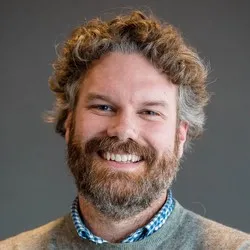
Dr Peter Crisp is an expert in crop genomics, epigenomics, and molecular genetics. He is a Group Leader at the School of Agriculture and Food Sustainability at The University of Queensland. Peter's research program focuses on crop functional genomics, epigenetics, and biotechnology, and has significantly advanced our understanding of the contribution of epigenetics to heritable phenotypic variation in plants. His group has invented groundbreaking technologies for harnessing (epi)genetic variation, and their discoveries have led to exciting new avenues for decoding genomes.

Peter's and Kimmy's visit is funded by the Centre for Biodiversity Analysis, hosted by Diep Ganguly. Please get in touch if you would like to meet with them during their time in Canberra.
Location


RN Robertson Building and Science Teaching Building, Research School of Biology, Australian National University.
Light refreshments for breaks will be provided. Lunch can be purchased from the nearby Little Pickle cafe or Kambri's cafes and restaurants.
Upcoming events in this series

Carlos Melian, EAWAG, Switzerland, will lead a workshop exploring the theoretical foundations and examples of network and multilayer network analysis for biological and ecological systems.
Join keynote speakers Nic Rawlence, University of Otago and Emilio Mármol Sánchez, University of Copenhagen for an exploratory workshop for researchers interested in generating and utilising historical datasets.
Jessica Storer and Rachel O’Neill from the University of Connecticut will give an overview of assembling repetitive parts of the genome, how to check assemblies and curate and annotate the genome for transposable elements.

Henry North from the University of Cambridge will present a hands-on workshop focused on the application of whole-genome population genomics to monitoring and managing invasive and endangered populations.

Paula Riccardi from the Bavarian State Collection of Zoology will introduce a framework for contextualising large volumes of imaging and DNA barcoding data into taxonomic revisions and species descriptions.