
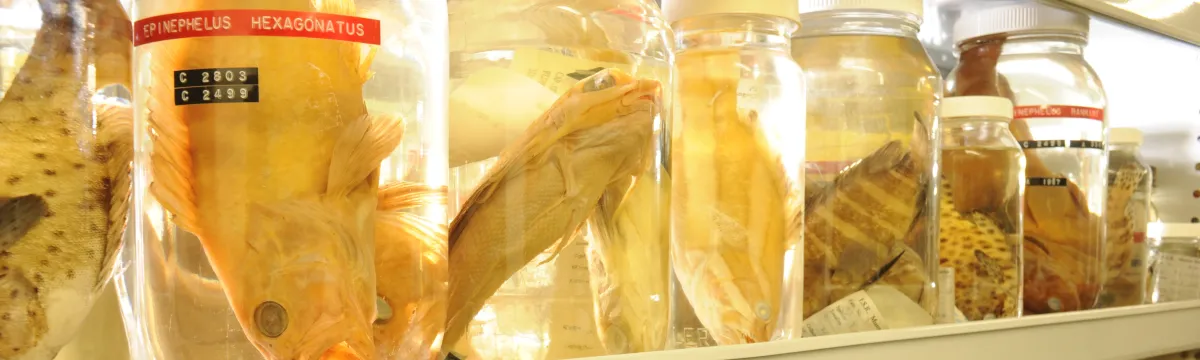
Historical gene expression and epigenetic analysis of ancient and museum specimens
Join keynote speakers Nic Rawlence, University of Otago and Emilio Mármol Sánchez, University of Copenhagen for an exploratory workshop for researchers interested in generating and utilising historical datasets.
Speakers
Event series
Content navigation
RegisterDescription
Advances in museum genomics techniques, particularly the generation of genome-wide data from wet-preserved museum specimens, are enabling historical analyses of gene expression and regulatory variation. This emerging capacity is opening new opportunities to reconstruct biological responses to environmental change through time and to translate historical genomic insights into evidence-based conservation planning.
Workshop aims
- To build a community interested in generating historical datasets that capture the temporal dynamism of regulatory change, for the study of disease, development and environmental response.
- Develop awareness and research community support to enable a larger application for a consortium-based approach for funding applications.
- We will use this workshop as the mechanism to scope an inter-institutional White Paper describing the efforts to scale-up this developing field of research and to search for interested collaborators and contributors.
Target Audience: Researchers in the museum genomics, ancient DNA, and/or evolutionary genomics fields that want to develop historical context to understand the trajectory of regulatory change and response to environmental pressures. Please note when registering if you can not attend in person. Keynote talks will be streamed.
Submit a speed talk
We invite short presentations from researchers, ECRs and students developing methods, datasets, analytical approaches or study systems that could benefit from a historical perspective. Your work does not need to currently involve historical specimens or gene-expression data. Tell us what you are working on, and how adding a temporal dimension could open new research opportunities. These needn’t be detailed presentations, even a few minutes introducing your work, a method you’re developing, or a question you’re keen to explore would be very welcome. The aim is to get to know the expertise and interests in the room and spark ideas for discussion and collaboration. Work in progress is welcome and encouraged! If you’re joining us virtually, we’re happy to facilitate sharing your talk.
Indicate your interest in presenting on the registration form.

ECR travel bursaries
We have a number of small ECR travel bursaries kindly funded by Covaris. If you are interested please send claire.stephens@anu.edu.au an email that includes your institution, current year of your PhD/Masters/Postdoc, and a few sentences on why you would benefit from a bursary to help with your travel to Canberra for the workshop. Applications close 23 October.
Draft schedule |
|---|
| Day 1 — Tues 10 Nov |
|
| Day 2 — Wed 11 Nov |
|
| Day 3 — Thu 12 Nov (optional) |
| Morning tour of the new Diversity Building of the National Research Collection, followed by morning tea. |
Invited keynote speakers
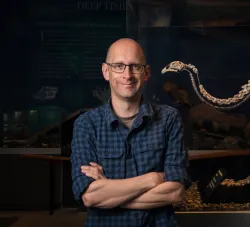
Associate Professor Nic Rawlence is Director of the Otago Paleogenetics Laboratory at the University of Otago. His research applies palaeoecological and paleogenetic approaches to reconstruct prehistoric ecosystems and examine how ecosystems responded to (or in some cases didn’t respond) to dynamic geological, climatic, and human impacts across New Zealand and the Pacific. His work increasingly integrates ancient and functional genomics to investigate evolutionary adaptation, ecological change, and trait evolution in extinct and extant island taxa.

Dr Emilio Mármol Sánchez, is a researcher from the University of Copenhagen who specialises in bioinformatics, biostatistics, genomics, and transcriptomics, with a particular interest in RNA biology and gene regulatory networks. His current work focuses on developing and optimizing laboratory and computational approaches to study RNA molecules in archival and ancient biological sources, while also applying a multi-omics approach to investigate how population dynamics and genetic load shape the epigenetic landscape and genomic architecture of extinct and extant endangered species.
Location
The workshop will be held in the ground floor seminar room of CSIRO Diversity (Bldg #803), The National Research Collections Australia, Dickson Way, CSIRO Black Mountain, Canberra.
The entrance (glass doors) is off Dickson Way. Meet in the foyer to sign in from 9:15am for a 9:30am start. If you need parking, the easiest will be directly across Clunies Ross Street at ANU in the Bruce carpark on Daley Road using PayStay, then walking up Dickson Way to the Diversity Building. Please get in touch if you need other arrangements.
Upcoming events in this series

Carlos Melian, EAWAG, Switzerland, will lead a workshop exploring the theoretical foundations and examples of network and multilayer network analysis for biological and ecological systems.
Jessica Storer and Rachel O’Neill from the University of Connecticut will give an overview of assembling repetitive parts of the genome, how to check assemblies and curate and annotate the genome for transposable elements.

Henry North from the University of Cambridge will present a hands-on workshop focused on the application of whole-genome population genomics to monitoring and managing invasive and endangered populations.

Paula Riccardi from the Bavarian State Collection of Zoology will introduce a framework for contextualising large volumes of imaging and DNA barcoding data into taxonomic revisions and species descriptions.