

Rapid evolutionary responses of invasive and native plants to changing environments: What are they doing and does it matter?
Katrina Dlugosch from the University of Arizona will discuss her group's work on the responses of invasive and native plant species to environmental changes across space and time.
Speakers
Content navigation
RegisterDescription
Rudi Lemberg Fellowship Lecture
2026 Rudi Lemberg Fellow Professor Katrina Dlugosch will discuss her group's work on the responses of invasive and native plant species to environmental changes across space and time.
My lab group studies traits that affect the distribution and abundance of species and how these traits can evolve rapidly, on human timescales. We focus particularly on invasive species that are colonizing new locations, as well as on native species responding to rapid environmental change. We are working to understand how genomic variation in these species interacts with their environment to shape adaptation and evolution of ecologically important traits.
In this talk, I will discuss lessons from our recent and ongoing work with two invasive plant systems (the fern Lygodium microphyllum, and the thistle Centaurea solstitialis) and with a native plant (the tiny borage Pectocarya recurvata), all responding to environmental changes across space and time. Our findings demonstrate the potential for rapid evolutionary genetic changes to alter ecological interactions and resulting patterns of distribution and abundance.
About the presenter
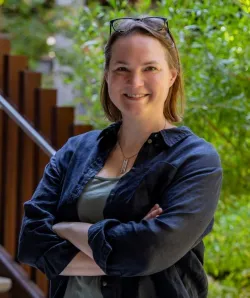
Katrina Dlugosch is a Professor of Ecology and Evolutionary Biology at the University of Arizona (Tucson, USA). She earned a Bachelor’s degree in Botany and another in Ecology, Evolution, & Conservation Biology from the University of Washington (Seattle, USA), and a PhD in Ecology & Evolutionary Biology from the University of California (Santa Cruz, USA). She conducted postdoctoral research at the University of British Columbia (Vancouver, Canada), before joining the University of Arizona in 2011. She is a leading expert on invasive species – the plants and animals that move into new areas and often cause environmental or agricultural damage. Her lab’s research focuses on genetic variation in these species, exploring how the DNA within invading populations allows introduced species to adapt remarkably quickly to survive in their new homes.
Katrina is visiting Australia thanks to the Australian Academy of Science's Rudi Lemberg Fellowship and is looking forward to meeting Canberra researchers, students, policy makers and managers after her AAS lecture for lunch at the Australian National University.
All welcome — please RSVP for lunch here.
Location
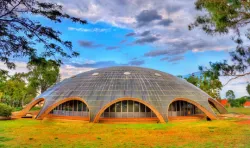

10:00am —Rudi Lemberg Fellowship Lecture: The Shine Dome, The Australian Academy of Science, 15 Gordon St, Acton
12:00pm — Meet and Greet lunch: Tearoom, 2nd floor, RN Robertson Building, 46 Sullivans Creek Rd, ANU